How to Choose Outdoor Flooring for Rainy and Dry Seasons
How to choose outdoor flooring for rainy and dry seasons?
- Porosity and water absorption
- Slip resistance
- UV stability
- Maintenance and heat
Overview
- Choosing the right outdoor flooring for rainy and dry seasons requires more than visual appeal, as long-term performance depends on how materials respond to moisture, heat, and daily wear.
- This guide compares common material options to help you understand which surfaces offer better durability, safety, and comfort in changing weather conditions for outdoor living spaces.
Outdoor flooring is often chosen for its looks, but how it holds up against extreme weather is what truly determines its long-term value. So, how can you choose outdoor flooring for rainy and dry seasons? The answer comes down to understanding how different materials handle constant moisture, intense heat, and daily wear and tear.
In a tropical climate, outdoor surfaces are constantly tested by heavy rainfall, high humidity, and scorching sunlight. Over time, these harsh conditions can cause standard wood to warp, split, fade, or rot.
That is why when planning an outdoor space, you need a material that stays stable and durable, no matter how drastically the seasons shift.
Porosity and Water Absorption
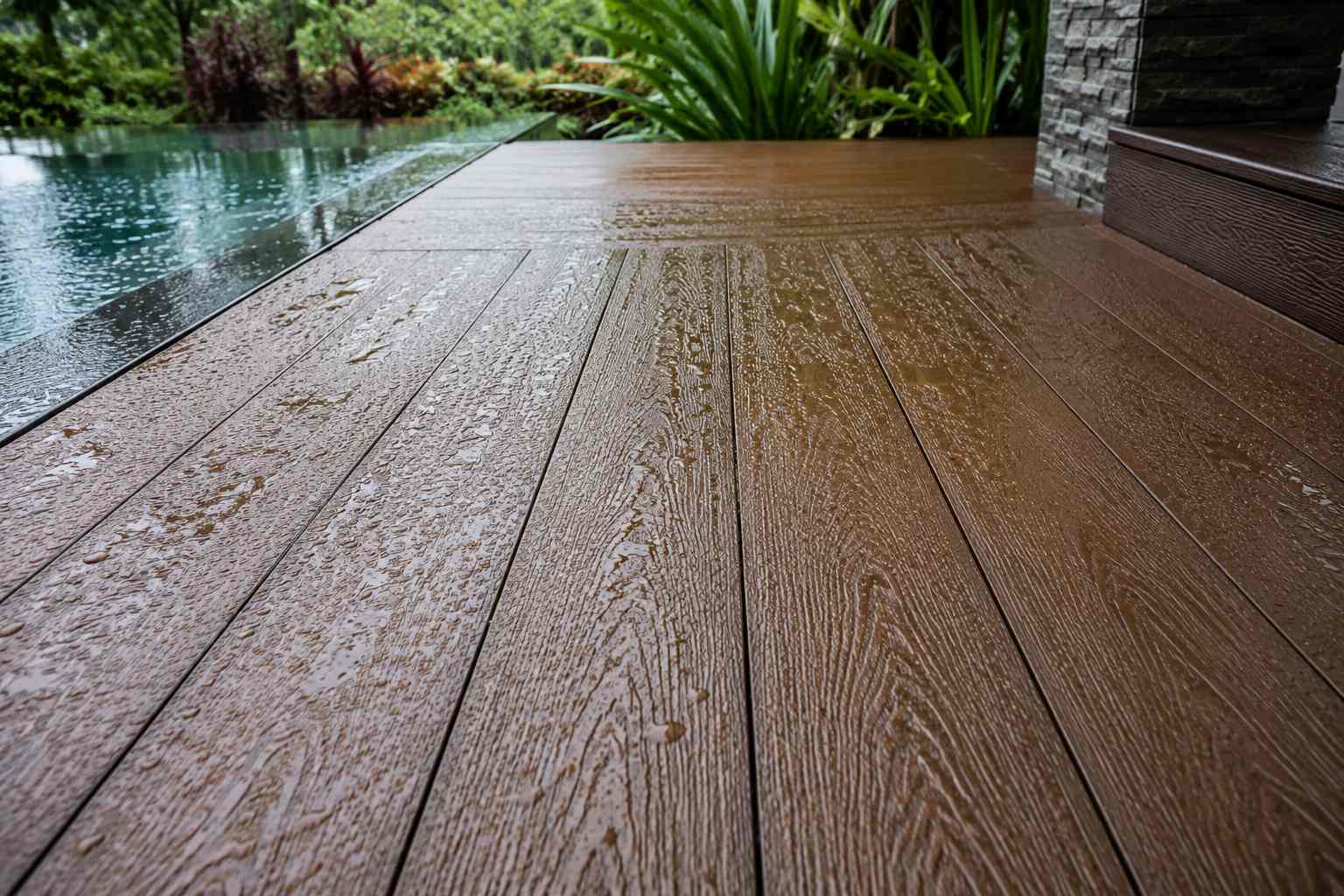
Not all outdoor flooring materials respond to rain exposure in the same way, and the difference often comes down to how much water they allow to pass through or retain. Materials with higher porosity tend to absorb more moisture, which can affect their stability and long-term performance. In contrast, non-porous or low-porosity materials are better suited for outdoor environments where water resistance is a priority.
Options you can choose from:
- WPC Flooring (Biowood-based systems): Practically rot-proof; non-porous structure prevents water absorption, helping resist mold and mildew formation.
- Porcelain Tiles: Non-porous surface that does not retain dirt or moisture; resistant to temperature changes, reducing risks of cracking or expansion.
- Ceramic Tiles (Glazed): Offer high water resistance; become non-porous when properly glazed, making them suitable for controlled outdoor use.
- Concrete Flooring: Naturally durable for wet seasons; requires proper sealing to improve water resistance and long-term performance.
Slip Resistance
In everyday use, even a durable material can become a safety concern if it does not provide enough grip underfoot. This is why slip resistance plays a key role in evaluating outdoor flooring, especially in spaces where exposure to rain or moisture is common.
Here are key slip resistance features to look for:
- R11 or higher slip rating (DIN 51130 standard): Indicates strong resistance to slipping and is especially suitable for wet environments.
- Textured or rough surface finish: Improves grip and reduces the risk of slipping on wet surfaces.
- Matte finish (non-polished surfaces): Avoids the hazards of polished tiles, which become slippery when wet.
- Anti-skid properties for wet conditions: Specifically designed to maintain traction during heavy rain or monsoon exposure.
UV Stability
In outdoor environments where sunlight is intense and consistent year-round, UV stability is an important factor in maintaining both the appearance and long-term performance of flooring materials. Without it, surfaces may lose their original finish or appear worn out much earlier than expected.
Biowood is specifically engineered to address these conditions, offering strong UV stability and heat resistance designed for long-term outdoor performance:
- UV-stable composition: Helps prevent color fading even under prolonged sun exposure.
- Retains natural timber look: Maintains its original wood-like appearance without bleaching or discoloration.
- Heat-resistant design: Built to withstand intense sunlight and high outdoor temperatures.
- No peeling or surface degradation: Preserves finish quality even under continuous exposure to harsh weather conditions.
Maintenance and Heat
In everyday use, some materials may require frequent cleaning, sealing, or special care to preserve their appearance, while others are designed for simpler upkeep and more consistent performance over time. At the same time, surface temperature can also affect how enjoyable an outdoor area feels, especially during periods of direct sunlight.
- Natural wood: Generally conducts and retains less heat than solid synthetic plastics and requires power washing, chemical cleaning, and periodic resealing or staining.
- Stone and ceramic tiles: Can heat up quickly in direct sunlight, depending on color and exposure, and typically require basic cleaning with a mop or a garden hose.
- Composite and PVC decking (high-quality capped systems): They typically require only seasonal washing with soapy water and a soft-bristle brush.
Installation Considerations
Proper installation is essential to ensure outdoor flooring performs well over time, as even high-quality materials can underperform when key details like water flow and joint treatment are not properly considered.
Drainage
Outdoor flooring should be installed with a proper slope of around 1 to 1.5 degrees to direct water away from the home, preventing pooling and reducing moisture buildup.
Grout
Using weather-resistant grout (epoxy, polymer-modified, or cementitious grout) helps minimize water seepage between joints, reducing the risk of cracks, mold growth, and structural weakening over time.
Build Safer and More Durable Outdoor Areas With GRM Biowood
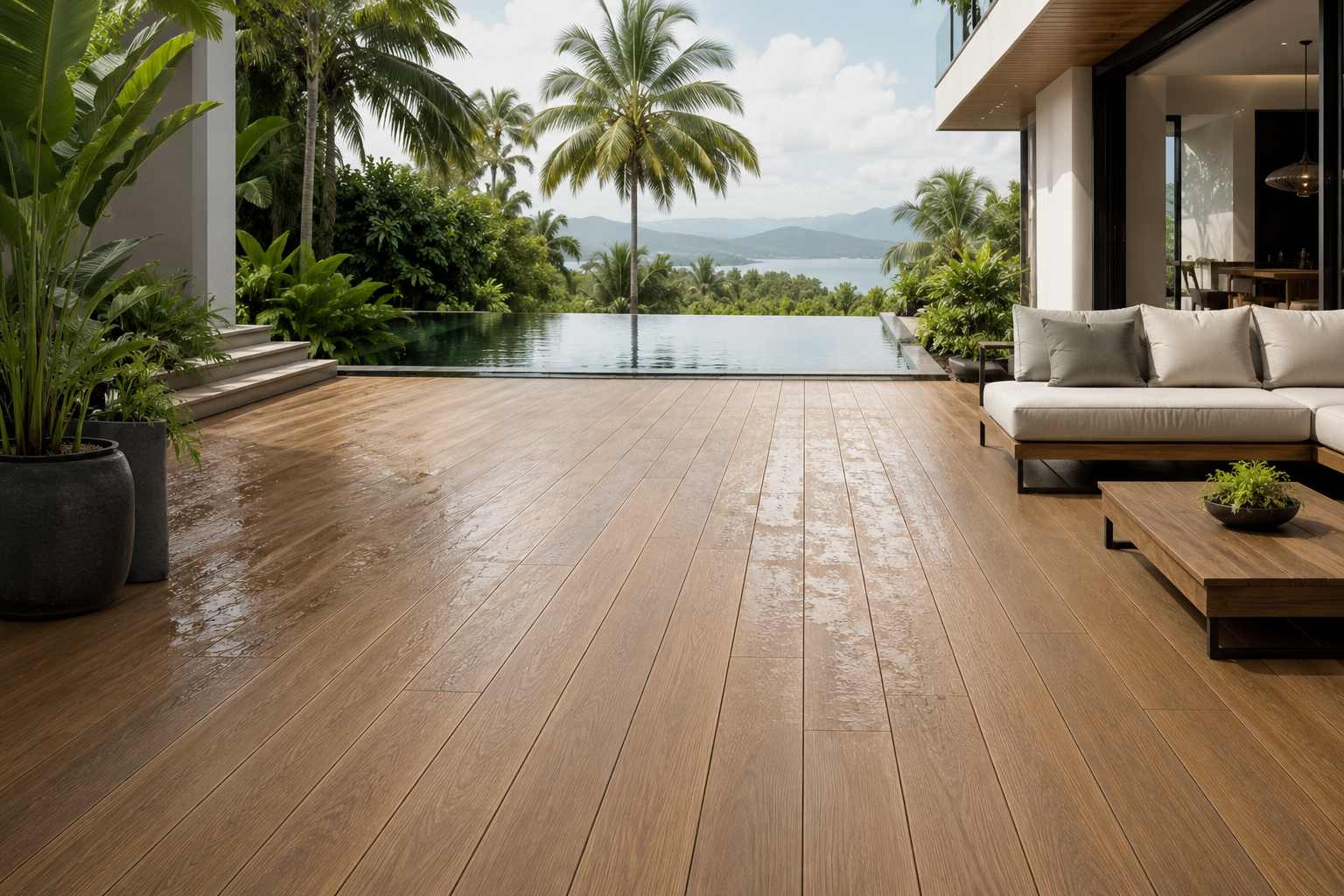
With outdoor flooring constantly exposed to changing weather conditions—from heavy rain to intense sun—GRM Biowood offers a practical solution that maintains consistent performance in both wet and dry environments. As a leading importer and exclusive distributor of Biowood architectural reconstituted composite wood products in the Philippines, we are committed to innovation, sustainability, and high-quality building solutions.
Key Takeaway
The answer to how to choose outdoor flooring for rainy and dry seasons lies in a material’s ability to withstand fluctuating weather conditions without compromising performance or appearance.
With GRM Biowood, you don’t have to sacrifice visual appeal for durability, as our WPC flooring made from Biowood reconstituted composite wood delivers lasting strength and natural timber aesthetics in all outdoor conditions. Get in touch with us today to find durable outdoor flooring.