Choosing the Right Louver Style: Horizontal, Vertical, or Angled?
Overview
- Wood louvers enhance façades by controlling light, airflow, and privacy while adding visual warmth.
- Horizontal louvers provide overhead shading, vertical louvers manage low-angle sun and privacy, and angled louvers offer precise environmental control.
- Using durable wood-plastic composite like GRM Biowood ensures low maintenance, weather resistance, and long-lasting performance.
The façade defines a building’s character, and wood louvers are key in managing light, airflow, and privacy. Understanding horizontal vs vertical vs angled wood louvers is essential for architects and designers seeking functional, sustainable, and visually appealing solutions.
GRM Biowood’s durable wood-plastic composite louvers combine timber’s warmth with long-lasting performance. This article explores their features, benefits, and ideal applications.
Horizontal Louvers

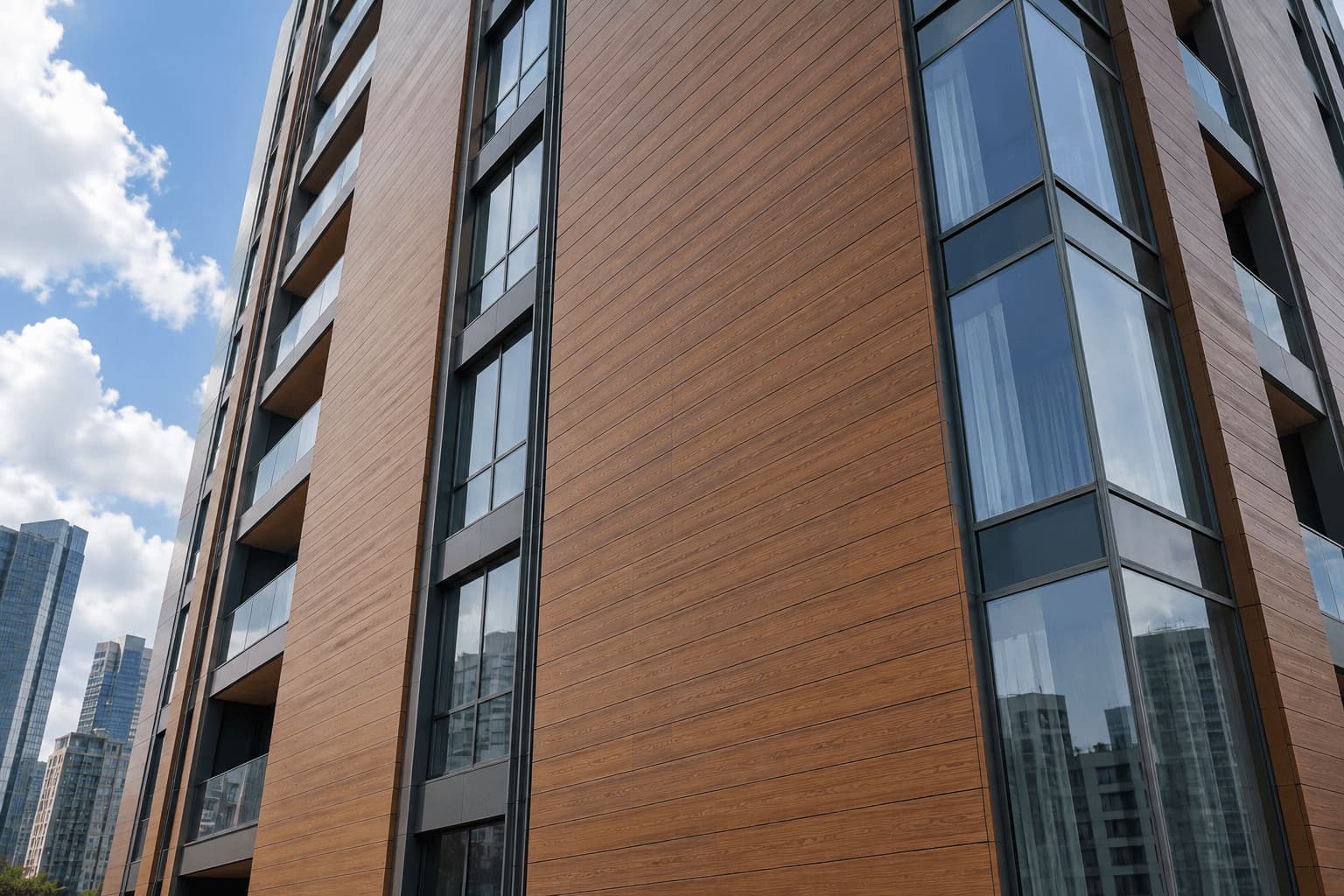
Horizontal louvers have slats parallel to the ground, visually widening structures while providing overhead shading and improved ventilation.
Primary Function
The primary function of a horizontal louver system is superior overhead solar shading. Running parallel to the ground, this profile effectively intercepts the sun when it is highest in the sky, particularly during the midday hours.
This overhead blockage significantly reduces the radiant heat load on windows and walls, helping maintain a cool interior climate.
Aesthetics
Horizontal designs tend to emphasize the breadth, stability, and clean, rectilinear nature of a structure.
They visually lengthen façades, drawing the eye across the building and reinforcing a sense of elegant, wide scale.
They are ideal for conveying a minimalist, contemporary, and sleek architectural presence.
Airflow and Ventilation
Horizontal louvers encourage lateral airflow, ensuring that spaces remain ventilated and fresh. Their design minimizes stagnant air pockets, which is particularly beneficial in open-plan areas, terraces, and semi-outdoor spaces.
Maintenance
In their natural orientation, horizontal surfaces can collect dust, especially in urban areas. Biowood’s low-absorbency WPC composite simplifies maintenance, allowing easy cleaning with a simple wipe while avoiding the common issues of traditional timber.
Best Uses
- Façade Overhangs and Eaves: For controlled shading over large glass areas and balconies.
- Pergolas and Canopies: Creating beautifully shaded outdoor lounges and decks in high-end resorts and residential properties.
- Mid-Rise Commercial Buildings: Emphasizing long, uninterrupted horizontal lines for a sense of substantial refinement.
Vertical Louvers
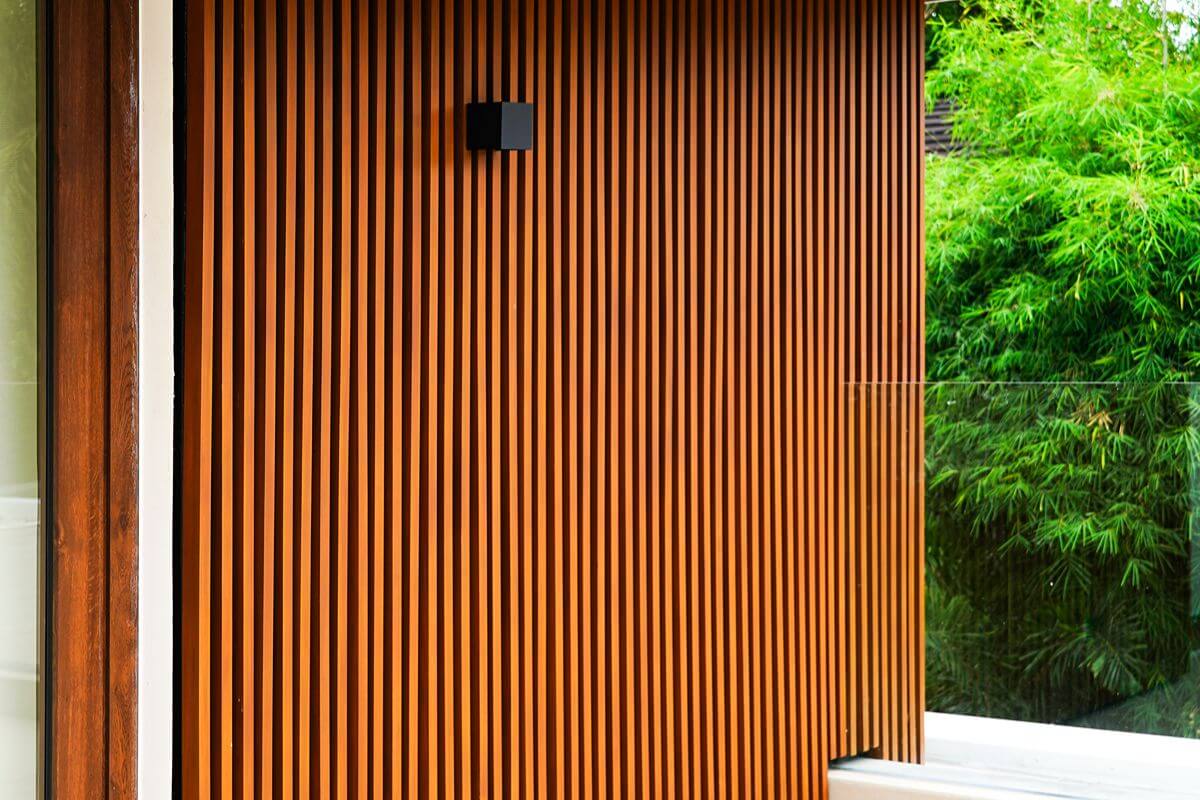
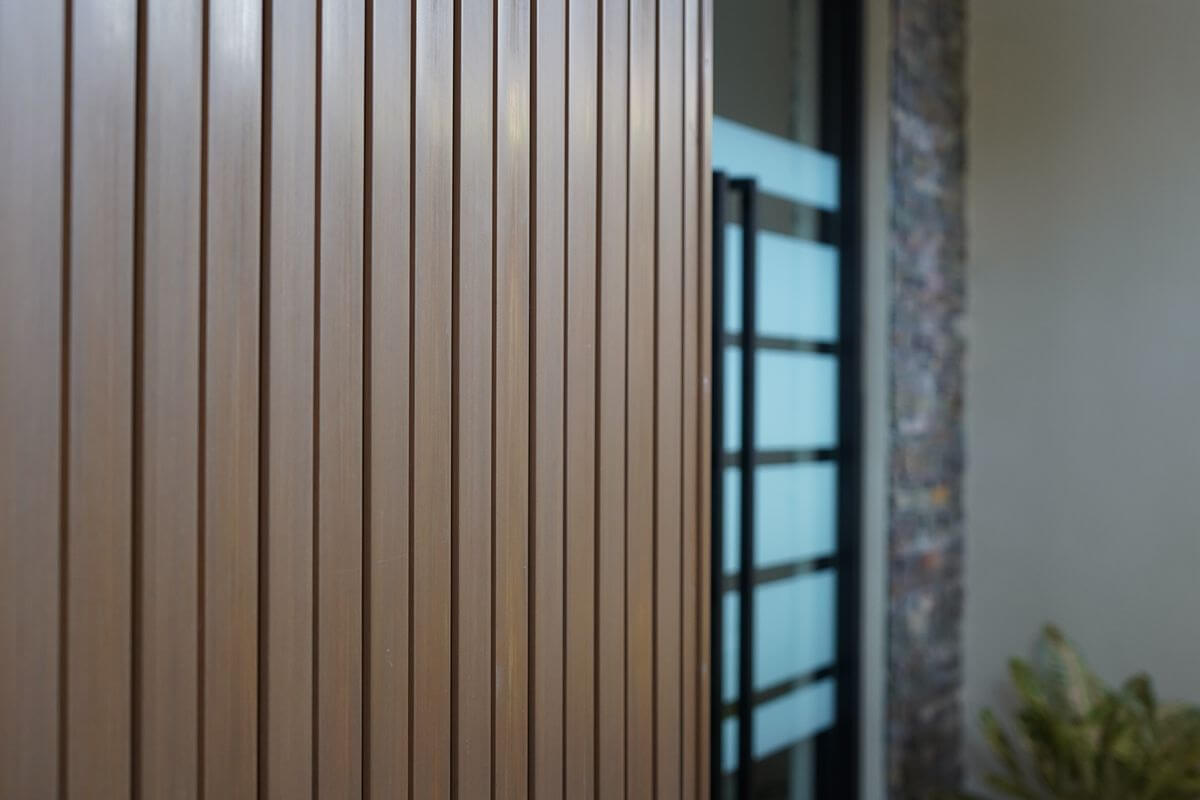
Vertical louvers run perpendicular to the ground, creating a contemporary look that emphasizes a structure’s height and adds visual drama.
Primary Function
Vertical profiles are expertly engineered for managing low-angle sun exposure and offering directional lateral privacy.
As the sun tracks across the east and west, vertical slats can be strategically angled to shield interior spaces from harsh morning or afternoon glare while still maintaining diffused natural light.
Aesthetics
Aesthetically, vertical louvers create a shifting, kinetic effect. As the sun moves across the sky, the pattern of light and shadow across the façade constantly changes, giving the building a sense of movement and dynamic artistry.
This is an essential feature for contemporary high-rise and commercial designs.
Airflow and Ventilation
Vertical louvers channel air horizontally through their slats, enhancing cross-ventilation. This orientation is particularly effective for tall windows, room dividers, and open-plan spaces, supporting healthy air circulation without disrupting design continuity.
Maintenance
Due to their vertical orientation, these louver systems are highly resistant to debris accumulation and are generally self-cleaning by rainfall.
This superior drainage minimizes any required upkeep, ensuring that the integrity of the design is preserved with minimal intervention.
Best Uses
East- and West-Facing Elevations: Offering superior glare control and thermal blocking.
High-End Residential Towers: Creating slender, sophisticated façade details that enhance privacy and airflow.
Screening Elements: Disguising service equipment or utilities in a chic, visually appealing manner.
Angled Louvers
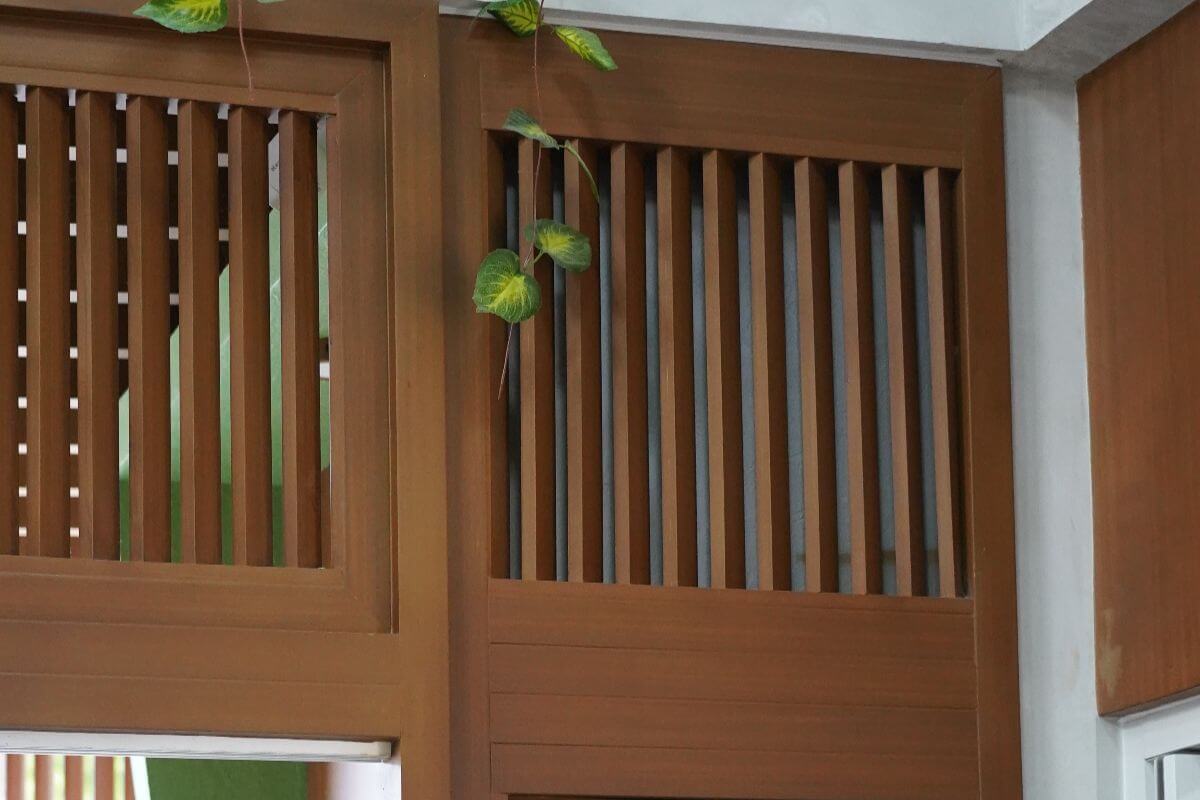
Angled louvers are slats installed at a non-perpendicular angle, either fixed or adjustable, providing precise control over light, airflow, and privacy for optimized environmental management.
Primary Function
Angled louvers, whether fixed or adjustable, provide precise control over light, airflow, and privacy.
Fixed angles are optimized for seasonal sun exposure, while adjustable systems allow fine-tuning throughout the year.
This adaptability makes them perfect for spaces where glare reduction, privacy, and energy efficiency are simultaneously important.
Aesthetics
Angled louvers create visual dynamism. Depending on tilt and spacing, they can generate geometric shadow patterns, rhythmic textures, or a modern “egg-crate” façade effect.
They suit contemporary, industrial, and statement-driven designs, offering both functional benefits and architectural flair.
Airflow and Ventilation
The slat angle directly affects airflow performance. Properly oriented, angled louvers optimize cross-ventilation while minimizing drafts, creating a comfortable interior climate even in high-exposure areas. Adjustable louvers allow fine-tuning to balance airflow with sunlight control.
Maintenance
Maintenance requirements differ by system. Fixed-angle louvers are durable and easy to maintain, while adjustable or motorized louvers are more complex and costly to install but provide responsive control, adapting quickly to weather changes, making them ideal for high-end, luxury properties.
Best Uses
- Coastal and Tropical Architecture: Perfectly balancing rainwater deflection, sun control, and cross-ventilation.
- Fixed Sunshades: Optimized for challenging, multi-directional sun exposures.
- Privacy and Light Control: Offering a tailored balance between external screening and internal illumination.
Considerations in Choosing the Right Louver for Your Project
Selecting the right louver style goes beyond aesthetics—it requires thoughtful consideration of climate, orientation, ventilation, privacy, and maintenance requirements.
Solar Control:
The key technical factor in louver selection is the building’s orientation to the sun. The goal is to block direct sunlight but allow diffused daylight.
- South-Facing: Given the high sun angle, horizontal louvers are the most effective solution for intercepting midday heat gain.
- East and West-Facing: Since the sun rises and sets at lower angles, vertical or carefully engineered angled systems are required to intercept the light and prevent harsh glare from penetrating deep into the floor plate.
Weather Resistance:
Durability is essential in the Philippines’ heat, humidity, and moisture. Louvers must withstand these conditions without losing aesthetic or structural integrity.
Biowood, a wood-plastic composite with 70% reconstituted wood and 30% polymer, provides the natural look of timber while preventing rot, termite damage, and moisture-related issues.
Fixed vs. Adjustable (Angled):
Fixed louvers offer simplicity and minimal maintenance, while adjustable angled louvers provide flexibility in managing sunlight, glare, and airflow.
The choice depends on the building’s orientation, climate, and user needs.
Acoustics and Privacy:
Both vertical and angled louvers are generally superior for both acoustic dampening and privacy compared to open horizontal systems.
Their density and orientation can scatter external sound waves and create effective visual barriers, a critical advantage for residential projects or commercial offices situated in dense urban environments.
Key Takeaway
Choosing between horizontal vs vertical vs angled wood louvers isn’t about picking one over the other—it’s about finding the style that best suits your design needs, orientation, and aesthetic vision.
Contact us to explore how biowood can handle any louver style, letting your architectural vision take center stage.