Wood Slat Ceiling vs. Drywall Ceiling: Which Is Better for Aesthetic Impact?
Overview
- Wood slat ceilings add warmth, depth, and architectural character, while drywall ceilings offer a clean, minimalist finish for simple and open spaces.
- This article compares wood-slat and drywall ceilings in terms of aesthetic impact, performance, and practicality for modern spaces.
- It explores how each option affects atmosphere, visual interest, statement value, and versatility.
When comparing wood slat ceilings vs. drywall ceilings for aesthetic impact, the choice goes beyond selecting a surface finish. Each option influences how a space feels, how it connects with surrounding architecture, and how well it supports a sustainable design direction.
Ceiling design plays a key role in shaping the ambiance in modern homes and architectural spaces. Whether for patios, balconies, resorts, or premium residences, it helps define the overall look and feel of a space.
Here’s a closer look at wood slat and drywall ceilings to help you choose the right option for your design needs.
Wood Slat Ceiling
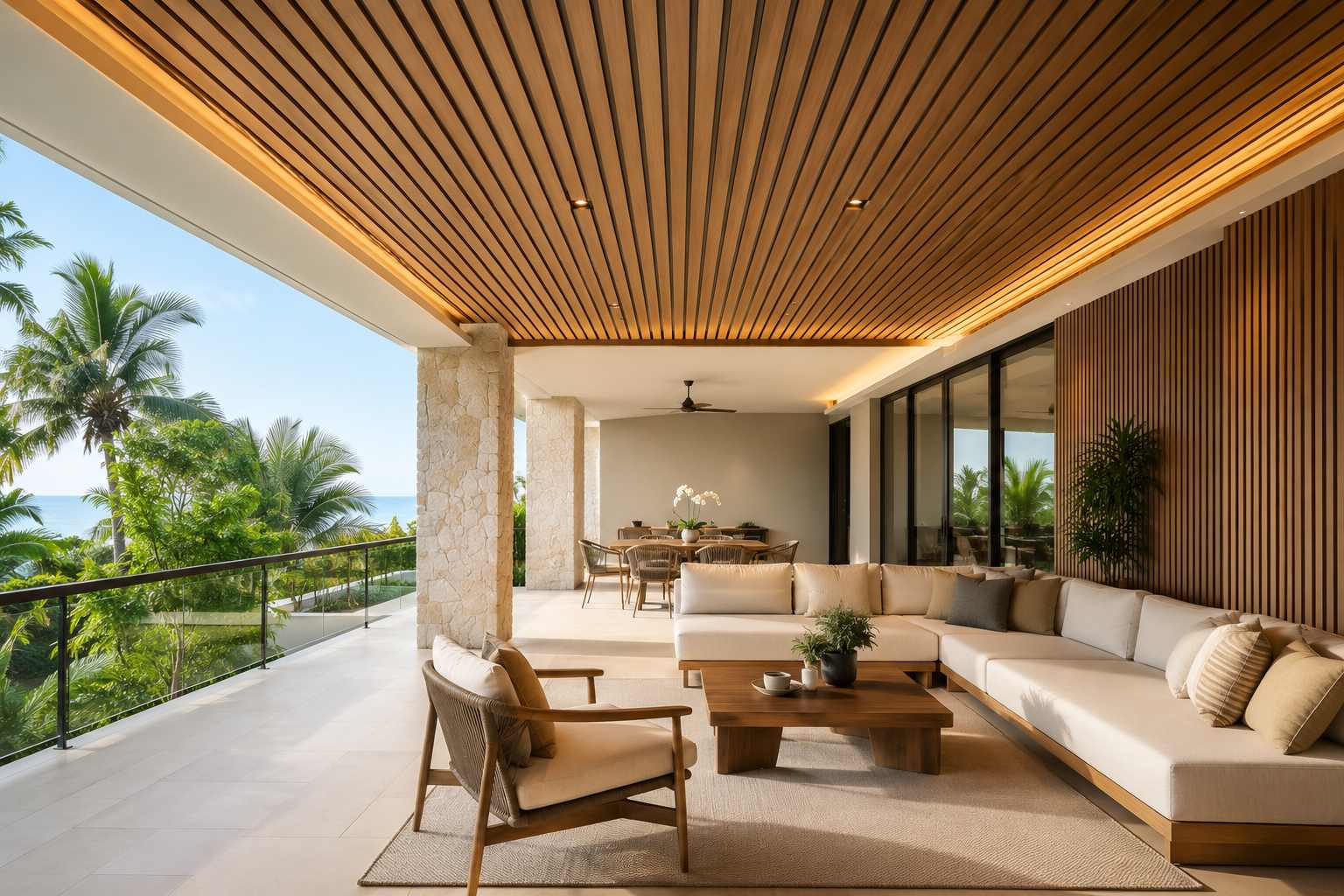
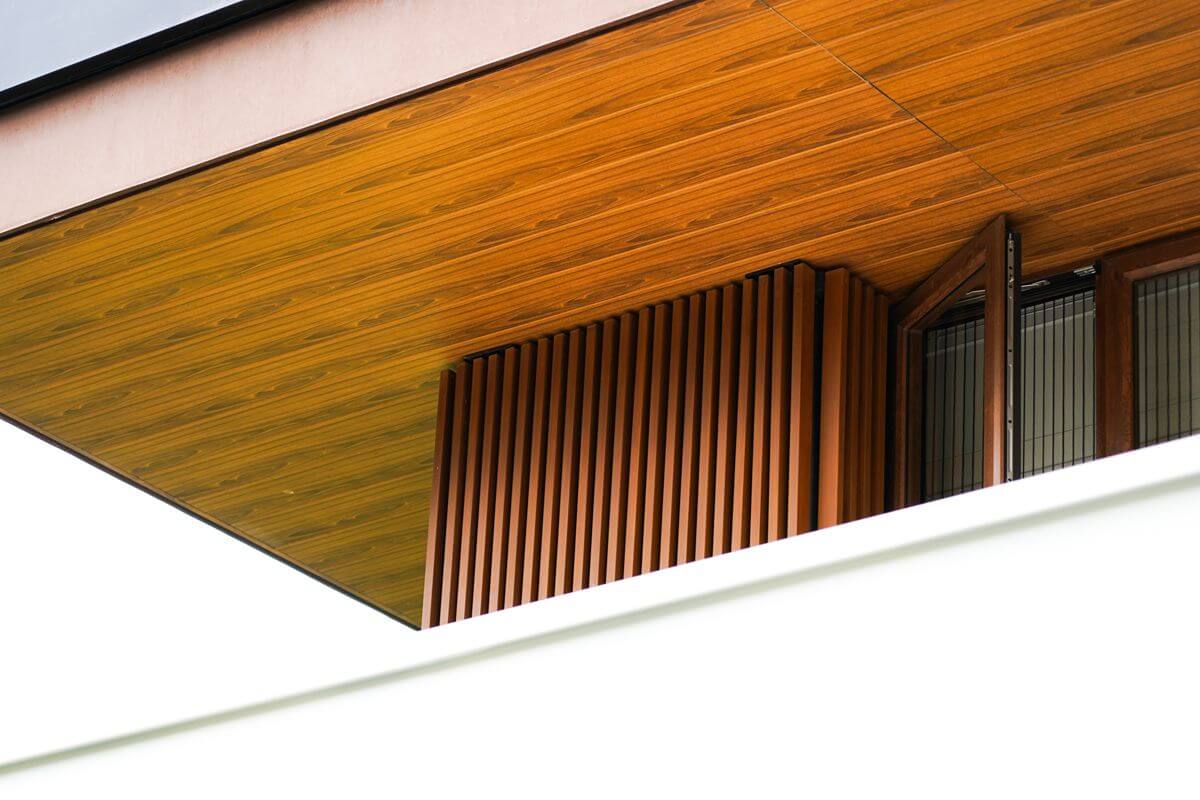
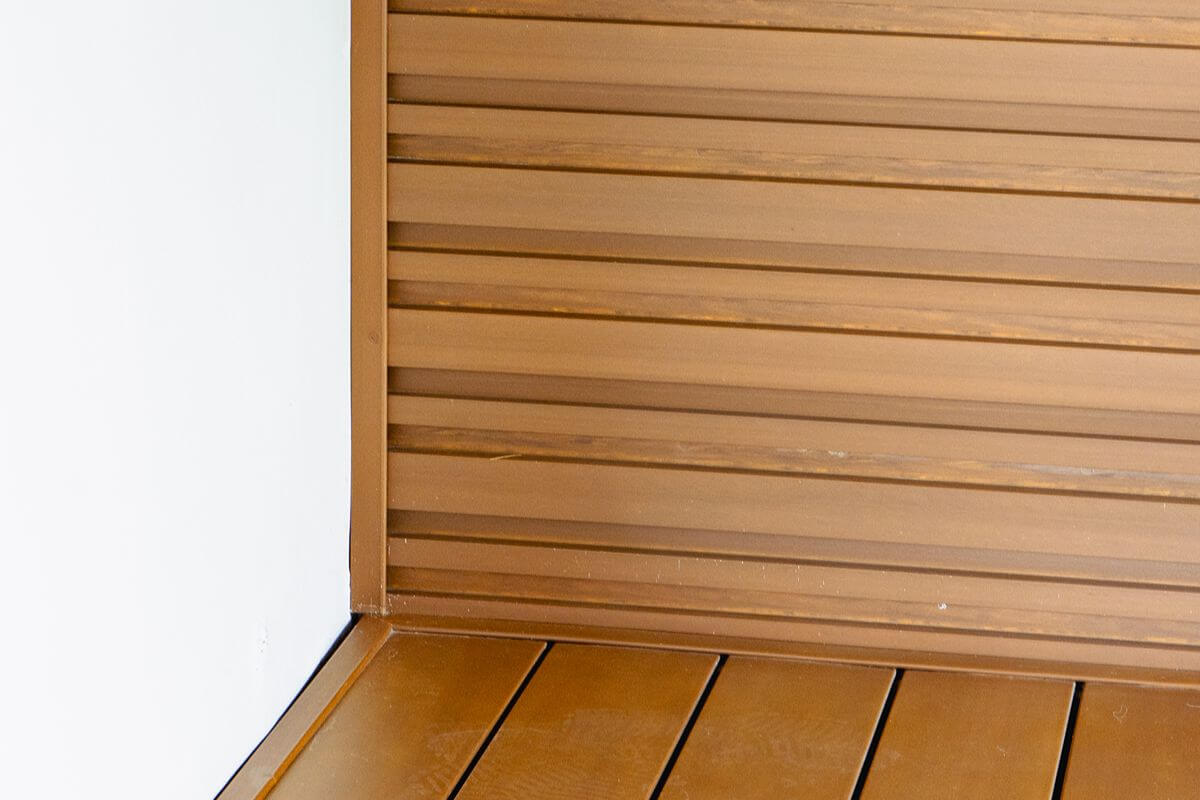
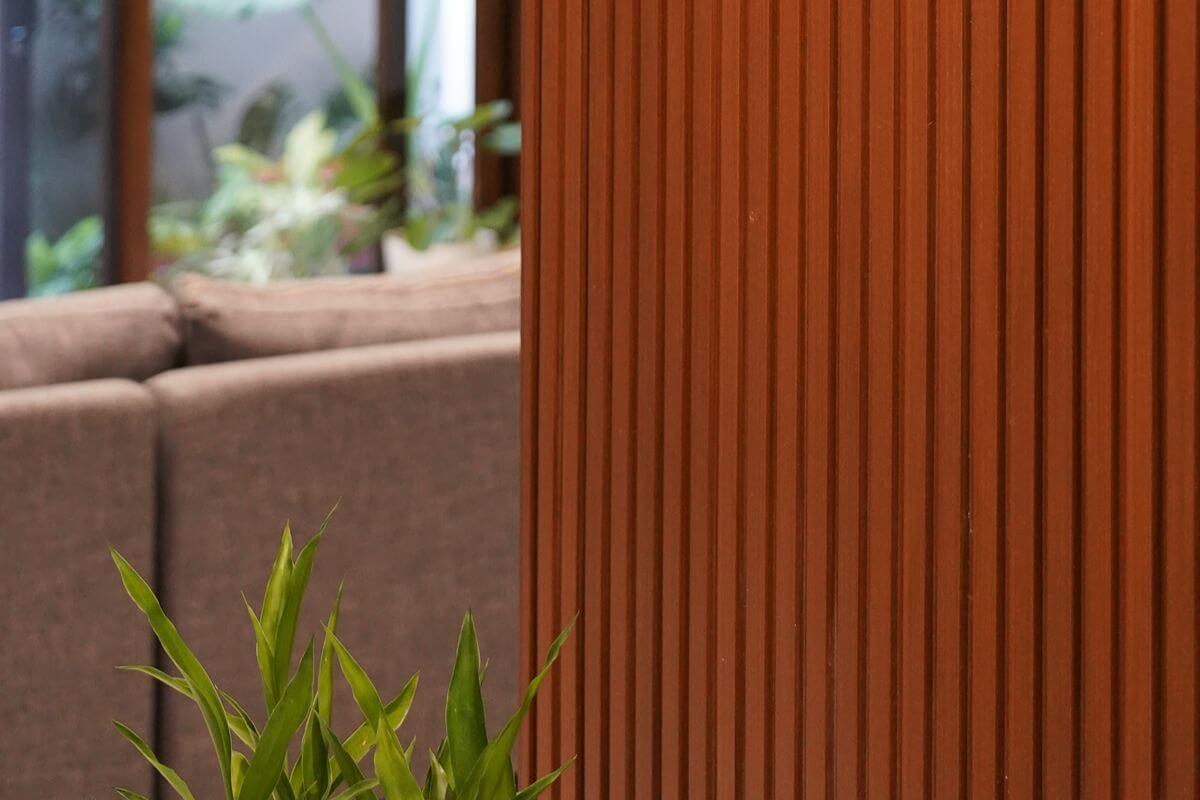
More than visual appeal, a wood slat ceiling brings natural warmth and a more sustainable wood-look finish to modern spaces. GRM Biowood’s wood slat ceilings made with Biowood combine the natural appeal of timber with the durability and low-maintenance performance needed, especially for Philippine conditions.
Atmosphere
The linear pattern, natural wood tones, and wood-like texture of a wood slat ceiling can make an area feel warmer, calmer, and more thoughtfully designed. Its earthy finish adds softness overhead, making spaces feel cozier and more human-scaled.
Visual Interest
The repeating slat pattern introduces texture and subtle shadow play, especially when paired with cove lighting or up-directed LEDs that highlight the ceiling’s depth and linear details. This gives the overhead plane a more dimensional, architectural look without overwhelming the rest of the space.
Statement Feature
A wood slat ceiling works well as a statement feature because it transforms the ceiling from a purely functional surface into a defining design element. Its linear pattern, rich wood tones, and layered shadow play naturally draw the eye upward, helping anchor the overall aesthetic of the space.
Versatility
This type of ceiling design works well on both flat and vaulted ceilings, making it suitable for a wide range of residential, commercial, and outdoor applications. On flat ceilings, it adds subtle rhythm and warmth without making the space feel lower, while on sloped or vaulted ceilings, it follows the architectural lines to emphasize height, volume, and openness.
Drywall Ceiling
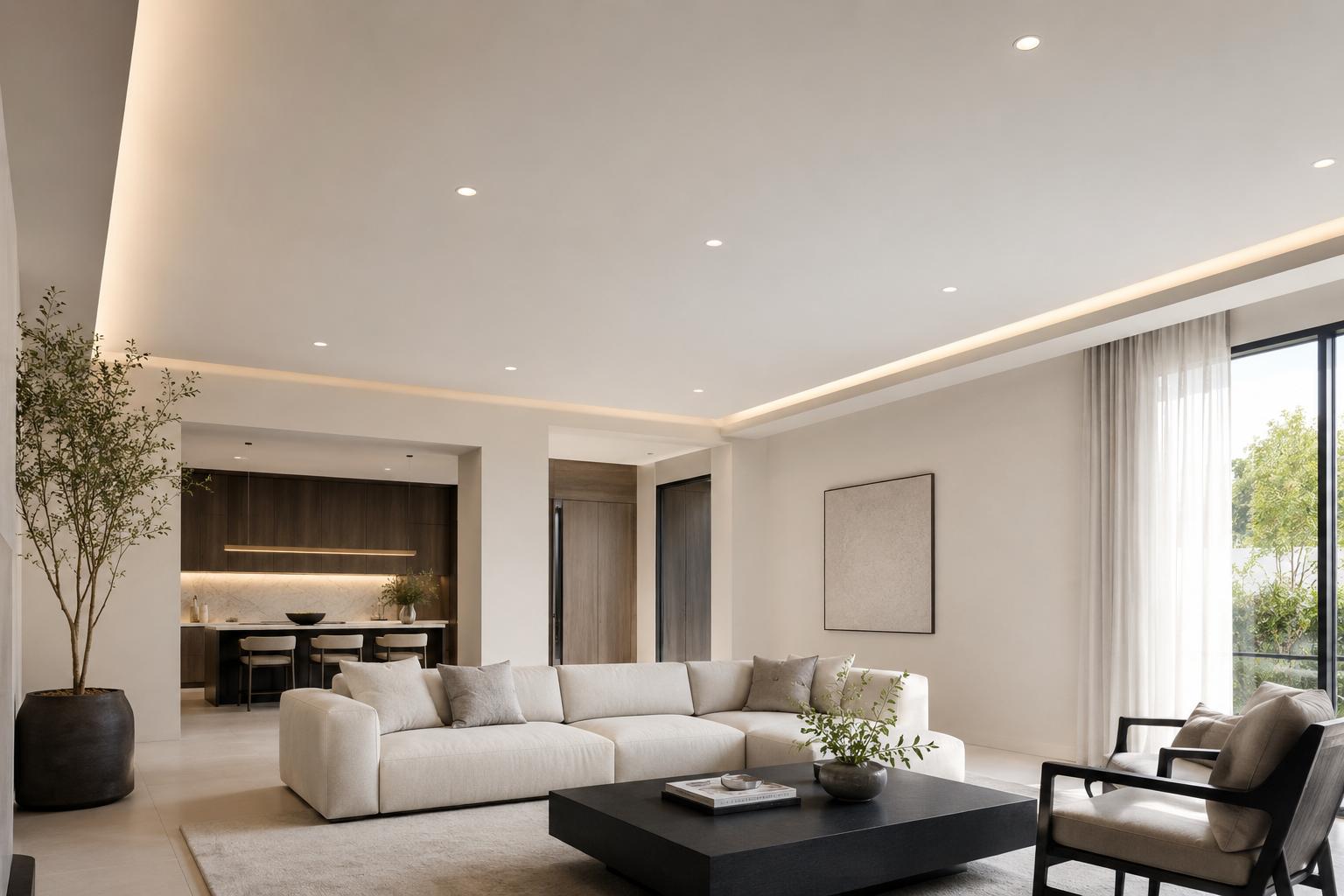
A drywall ceiling provides a smooth and streamlined finish that works well for simple, modern interiors. However, compared with a wood-slat ceiling, its visual effect is usually more restrained.
Atmosphere
A drywall ceiling lends the space a clean, neutral, minimalist feel, making it suitable for understated interiors. Its smooth, continuous surface reduces visual clutter, allowing furniture, lighting, and architectural lines to stand out instead of drawing attention to the ceiling itself.
Visual Interest
The visual interest of a drywall ceiling comes from its clean and seamless finish. Its monotone surface reflects light evenly across the room, which can help make interiors feel brighter, larger, and more open. Drywall usually requires lighting details, ceiling recesses, or paint treatment to add depth and dimension.
Statement Feature
A drywall ceiling can still serve as a quiet statement by emphasizing the purity of form and precision of detailing. Its smooth, uninterrupted plane becomes a blank canvas that highlights carefully placed lighting, turning the ceiling into a subtle yet deliberate design moment rather than just a background surface.
Versatility
This type of ceiling design can suit a wide range of interior styles, especially in spaces that need a clean, simple finish. Its smooth surface works well in modern, minimalist, and contemporary designs, and it can be adapted through paint color, ceiling shape, or lighting placement. Its flexibility depends more on added design treatments than on the material’s natural texture or character.
Key Considerations
While both options can support a modern design, the right choice also depends on how the ceiling performs in terms of space, daily maintenance, long-term durability, and acoustic comfort. These considerations help determine whether the ceiling should serve as a subtle background surface or a more expressive architectural feature.
Room Size
In small to medium rooms, a drywall ceiling may work better because its flat, seamless surface helps reduce visual clutter and makes the space feel more open and airy. For larger areas, a wood slat ceiling can be more applicable because it helps break up wide ceiling spans and gives open layouts a stronger sense of structure.
Maintenance and Durability
Wood slat ceilings made from Biowood are designed to resist warping and cracking while offering low-maintenance performance. On the other hand, drywall ceilings may be more vulnerable to sagging, cracking, or staining when exposed to leaks, excess moisture, or poor ventilation.
Acoustics
Timber or engineered-wood slat ceilings can improve sound absorption, especially when paired with acoustic backing materials, such as mineral wool or foam, behind the slats. In comparison, a standard painted drywall ceiling is more reflective, which means it does little to absorb sound on its own.
Key Takeaway
When comparing wood slat ceilings vs. drywall ceilings for aesthetic impact, the better choice depends on the atmosphere, maintenance needs, and design value you want to achieve.
For projects that call for a refined, timber-inspired ceiling without the usual upkeep of natural wood, GRM Biowood offers Biowood ceiling solutions that support both aesthetic appeal and long-term performance in local environments.
Contact us today to explore the right ceiling solution for your space.